
Real Estate Vs. Stock Market: The Ultimate Investment Comparison
 78
78  1
1  9
9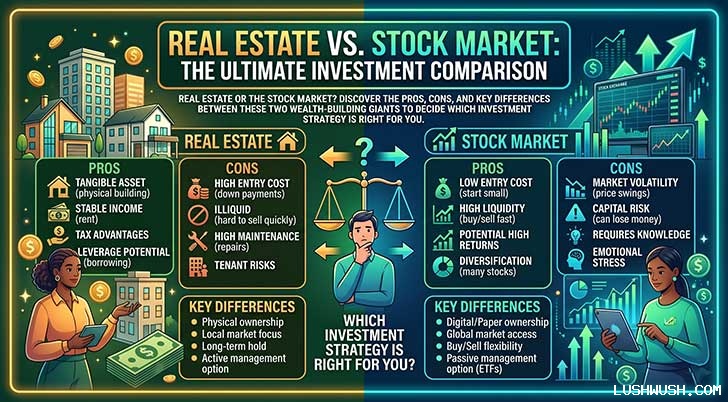
Real Estate vs. Stock Market: The Ultimate Comparison
When it comes to building long-term, generational wealth, two heavyweight champions dominate the financial world: Real Estate and the Stock Market.
Historically, both asset classes have created millions of millionaires. However, they require completely different mindsets, skill sets, and capital. If you are standing at a financial crossroads wondering where to park your hard-earned money, you are not alone.
Lets break down the pros, cons, and key differences of Real Estate vs. the Stock Market so you can decide which path aligns with your financial goals.
The Case for Real Estate: The Tangible Asset
Real estate involves purchasing physical propertylike residential homes, commercial spaces, or raw landto generate rental income or hold for capital appreciation.
The Pros:
Tangible Value: You can see it, touch it, and live in it. Unlike a digital stock ticker, property is a physical asset that holds intrinsic value.
Passive Cash Flow: A well-managed rental property provides a steady stream of monthly income, which can help cover your living expenses.
The Power of Leverage: Real estate is one of the only investments where a bank will lend you 80% of the money to buy an asset. You control a $500,000 property with only a $100,000 down payment.
Tax Advantages: Real estate investors often benefit from massive tax deductions, including property depreciation and mortgage interest deductions.
The Cons:
High Barrier to Entry: You need a significant amount of upfront cash for down payments, closing costs, and repairs.
Illiquidity: You cannot cash out of a house in a day. Selling property takes months and involves heavy agent commissions and fees.
The "Tenant" Factor: Being a landlord is rarely 100% passive. You have to deal with maintenance issues, bad tenants, and property taxes.
(Planning to finance a property? Before you take a mortgage, use our Smart EMI & Interest Calculator to see exactly how much extra interest the bank will charge you over the years!)
The Case for the Stock Market: The Paper Asset
Investing in the stock market means buying fractional ownership in publicly traded companies (like Apple, Amazon, or Google) or investing in broad Index Funds and ETFs.
The Pros:
Ultimate Liquidity: Need cash fast? You can sell your stocks or index funds with the click of a button and have the money in your bank account in a few days.
Low Barrier to Entry: You don't need $100,000 to start. Thanks to fractional shares and Systematic Investment Plans (SIPs), you can start investing in the stock market with as little as $10 or Rs. 1,000.
Truly Passive: Unlike fixing a leaky roof at 2 AM, index fund investing requires zero physical effort. You buy, hold, and let the corporate world do the heavy lifting for you.
Historical Returns: Historically, the broader stock market has returned an average of 8% to 10% annually over long periods, easily beating inflation.
The Cons:
High Volatility: The stock market can drop 20% in a single month due to global events or economic panic. It requires a strong stomach and emotional control.
No Leverage: You generally have to buy stocks with 100% of your own cash. (Trading on margin is highly risky and not recommended for long-term investors).
The Verdict: Which is Better?
There is no "one-size-fits-all" answer. The right choice depends entirely on your personality and capital.
Choose Real Estate if: You have a large amount of upfront capital, you like physical assets, you want to use bank leverage, and you don't mind the hands-on work of property management.
Choose the Stock Market if: You want a truly passive income stream, you are starting with a smaller monthly budget, you value high liquidity, and you have the patience to let compound interest work its magic over a decade or more.
Want to See the Stock Market in Action?
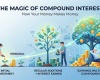
If the hands-off approach of the stock market appeals to you, the secret to massive wealth is setting up a monthly SIP (Systematic Investment Plan) and letting compound interest do the rest.
Don't just take our word for itsee the math for yourself! Use our interactive tool to project how a small monthly investment in the stock market can grow into a massive fortune over time.
Calculate Your Future Wealth with the Visual Compound Interest & SIP Calculator!


















All comments, feedback, information or materials except email addresses submitted to Lush Wush shall be considered non-confidential and its property. By submitting such comments, feedback, information or materials to us, you agree to a no-charge assignment of all worldwide rights. For the best interest of the community, please refrain from posting vulgar comments, profanity, or personal attacks. Comments submitted may automatically be flagged for review by our moderation team before appearing on the website.