
Mutual Funds Explained: The Beginners Guide To Investing Without The Stress
 39
39  1
1  3
3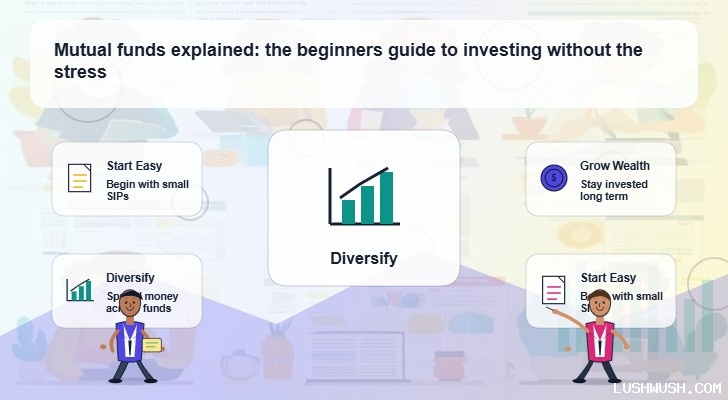
Mutual Funds Explained: The Beginner's Guide to Investing Without the Stress
Let's say you want to start investing. You know it's the right move. You've heard that the stock market builds wealth over time and that sitting on cash is slowly losing value to inflation.
But then you open a brokerage app and you're staring at thousands of companies. Which ones do you pick? How do you know if a company is financially healthy? What if you choose wrong and lose everything?
This is exactly where most beginners freeze and where mutual funds change the game entirely.
So What Actually Is a Mutual Fund?
Here's the simplest way to think about it.
Imagine 1,000 different people each putting $1,000 into a shared pot. That pot now has $1,000,000 in it. A professional fund manager takes that money and invests it across dozens or even hundreds of different companies, bonds, or assets. Every person in that pool owns a small slice of everything the fund holds.
That's a mutual fund.
You don't have to pick stocks. You don't have to watch the market every day. You put your money in, a professional manages it, and your investment grows (or shrinks) based on how the overall fund performs.
It's one of the most accessible ways to get into investing and it's been around for decades for good reason.
Why Do People Actually Choose Mutual Funds?
There are a few things mutual funds do really well, especially for people who are just starting out.
You get instant diversification. When you buy one stock, your money rides entirely on that one company. If it fails, you lose. But when you invest in a mutual fund, your money is spread across many companies. If one tanks, the others can make up for it. This is what reduces risk without requiring you to do anything extra.
A professional is managing your money. Fund managers spend their entire careers studying markets, reading financial reports, and making investment decisions. You're essentially hiring their expertise which, for most people, produces better results than trying to manage everything yourself.
It's liquid. Unlike real estate or fixed deposits that lock your money away, mutual funds let you withdraw your investment when you need it. You're not stuck waiting years to access your own money.
The entry cost is low. You don't need a lot of money to start. Many mutual funds allow investments of as little as a few hundred rupees or dollars per month through a SIP (Systematic Investment Plan), which lets you invest a fixed amount regularly instead of putting in a lump sum.
The Different Types of Mutual Funds
Not all mutual funds are the same. They each have different goals, different risk levels, and different types of assets they invest in. Here's a plain-language breakdown:
Equity Funds invest primarily in stocks. These have the highest potential for growth over the long term, but they also come with more short-term ups and downs. If you're young and investing for 10+ years, equity funds are usually the go-to choice.
Fixed Income Funds (Debt Funds) invest in bonds and government securities. These are more stable and less volatile than equity funds, but the returns are also more modest. Good for people who want steady, predictable growth with less risk.
Balanced Funds (Hybrid Funds) do both they split the investment between stocks and bonds. You get some growth potential from the equity side and some stability from the debt side. These are great for people who want a middle ground without having to manage two separate funds.
Sector Funds focus on one specific industry like technology, healthcare, or energy. These can perform very well if that sector booms, but they're riskier because you're concentrated in one area. Best for investors who have a strong view on a particular industry.
The right type for you depends on your age, your risk tolerance, and how long you plan to keep the money invested.
How to Actually Start Investing
Getting into mutual funds is genuinely straightforward. Here's what the process looks like:
You can invest directly through a mutual fund company's website, through a financial advisor, or through an online brokerage platform. Most platforms today are simple enough that you can get set up in under 30 minutes.
When you're choosing a fund, here are the four things to actually look at:
What's the investment objective? Every fund has a stated goal growth, income, capital preservation, etc. Make sure it matches what you're trying to do with your money.
What's the risk level? Funds are usually labeled as low, moderate, or high risk. Pick something that matches how you'd actually feel if your portfolio dropped 20% in a bad month.
What are the fees? This one matters more than most people realize, and we'll get into it in a moment.
What's the track record? Past performance doesn't guarantee future results, but looking at how a fund has performed over 5 to 10 years gives you a sense of its consistency and how it handled market downturns.
The Fee Conversation Nobody Wants to Have (But Should)
Here's something that often surprises new investors: mutual fund fees can significantly eat into your returns over time.
These fees are usually expressed as an "Expense Ratio" a small percentage of your investment that the fund charges annually. It might look tiny, like 0.5% or 1.5%, but over 20 or 30 years of investing, even that small difference can compound into a massive amount of lost returns.
For example: an expense ratio of 0.5% versus 2.0% might not seem like a big deal. But on a $50,000 investment over 25 years, that difference could mean tens of thousands of dollars less in your pocket.
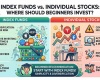
The lesson? Always check the expense ratio before committing to a fund. Look for funds with low fees, especially if you're investing for the long term. Index funds, which passively track a market index, are known for having very low expense ratios and are worth looking into.
One More Thing: Time Is Your Best Friend Here
The real power of mutual funds doesn't show up in year one. It shows up in year 10, year 15, year 20.
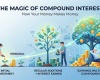
That's because of compounding the process where your returns generate their own returns. The longer your money stays invested, the faster this effect snowballs. A small, consistent monthly investment made over decades can grow into something genuinely life-changing.
This is why starting early matters so much more than starting with a large amount. Investing $100 a month for 30 years beats investing $500 a month for 10 years in almost every scenario, purely because of how compounding works over time.
Want to see exactly what your investment could look like over 10, 20, or 30 years based on your monthly amount and expected return? This tool does the math for you instantly:
Calculate Your Future Wealth with the Visual Compound Interest & SIP Calculator
The Bottom Line: Mutual funds aren't a shortcut to getting rich quickly. But they are one of the most reliable, accessible, and professionally managed ways to build real wealth over time without needing to become a financial expert yourself. Start small, stay consistent, keep your fees low, and let time do the heavy lifting.

















All comments, feedback, information or materials except email addresses submitted to Lush Wush shall be considered non-confidential and its property. By submitting such comments, feedback, information or materials to us, you agree to a no-charge assignment of all worldwide rights. For the best interest of the community, please refrain from posting vulgar comments, profanity, or personal attacks. Comments submitted may automatically be flagged for review by our moderation team before appearing on the website.