
How To Read A Companys Financial Report For Beginners
 28
28  1
1  5
5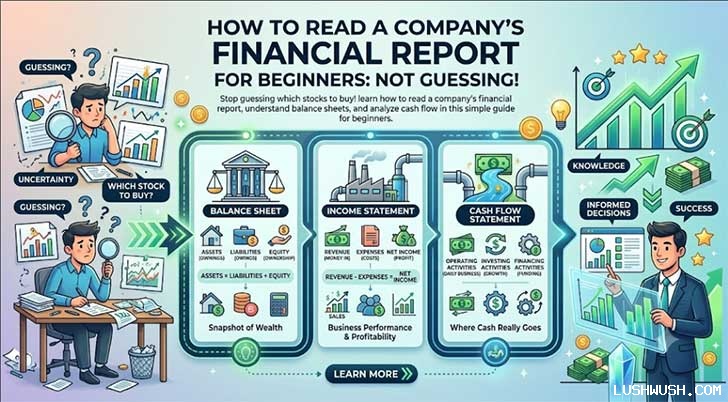
You know that friend who keeps texting you about a stock they just bought? "Trust me, this company is going to moon," they say. Maybe you've actually bought it toojust because they said it was good.
Here's the uncomfortable truth: that's not investing. That's not investingthat's following a tip blindly, and it rarely ends well. Real investing means actually understanding what you're buying into. And the best way to do that? Reading what the company itself publishes about its finances. I knowit sounds boring. But stick with me. This is way easier than you think.
The Big Picture
Every publicly traded company has to release financial reports. Quarterly ones (every 3 months) and annual ones (once a year). These documents are their "report card." They show whether the business is actually healthy or just pretending to be.
The good news? You don't need a degree in accounting. You don't even need to read the whole thing. There are just three key documents you need to understand, and they answer three simple questions:
- Are they making money?
- What are they worth?
- Where is the cash actually going?
Let's break these down one at a time.
The Income Statement: Are They Actually Profitable?
Think of the Income Statement as a scorecard. It shows everything the company brought in, everything they spent, and what's left at the end.
Revenue (The Top Line)
This is the money coming in from selling their products or services. Before any expenses. Nothing taken out yet.
What you want to see: this number growing every quarter. If a company made $100 million in revenue last year and $120 million this year, that's a good sign. People want what they're selling.
Operating Expenses
This is what it actually costs to run the business. Salaries, rent, marketing, research and developmentall of it. Think of it as the business's monthly bills.
Why does this matter? A company could have massive revenue but terrible margins if their expenses are out of control. You want to see a balance where revenue is growing faster than expenses.
Net Income (The Bottom Line)
After everything is paidsalaries, expenses, taxes, interest on debtwhat does the company actually keep? This is the real profit. And here's the thing: if this number keeps going negative, the company is slowly dying. They're spending more than they're making. That's a red flag you can't ignore.
The Balance Sheet: What Are They Actually Worth?
The Balance Sheet is like a snapshot of the company's wallet at a specific moment. It answers: if they sold everything and paid off everyone they owe, how much money would be left?
The formula is simple: Assets - Liabilities = Shareholders' Equity
Assets (What They Own)
Cash in the bank, inventory, buildings, equipmentanything valuable the company owns.
Pay special attention to "Current Assets"this is cash and stuff that can be turned into cash within a year. Why? Because this shows whether the company can actually pay its bills in the short term.
Liabilities (What They Owe)
Loans, money they owe to suppliers, salaries they haven't paid yetall their debts.
This is crucial: look at the Long-Term Debt. If a company's debt is growing way faster than its revenue, that's dangerous. They might look profitable on paper, but they're drowning in obligations.
Shareholders' Equity
This is the company's true net worth. It's what would be left for the owners after everything is paid off.
The Cash Flow Statement: The Truth Detector
Here's something most beginners don't know: a company can make profit on paper but have almost no actual cash in the bank. How? Accounting tricks and creative bookkeeping. The Cash Flow Statement cuts through all that. It shows the real money moving in and out.
Operating Cash Flow
This is the actual cash the company's core business is generating. Not profit on paperreal cash.
Here's why this matters: Imagine a company makes a huge sale but the customer doesn't pay for 6 months. On the Income Statement, they count that as profit immediately. But they don't have the cash yet. The Cash Flow Statement shows the truth.
If a company reports great profits but their Operating Cash Flow is negative or weak, something's wrong. They're not actually collecting money, they're just creating obligations.
Free Cash Flow
This is the big one. It's the cash left over after the company pays for everything it needs to keep runningsalaries, inventory, equipment, maintenance, all of it.
Think of it this way: if Operating Cash Flow is your paycheck, Free Cash Flow is what's left in your account after bills are paid.
Companies with strong Free Cash Flow can do things like pay dividends to shareholders, buy back their own stock, or invest in growth. This is a sign of a genuinely healthy business, not just a company that looks good on paper.
How to Actually Use This Information
You don't need to read the whole report. You don't need to understand every technical detail. Here's what you do:
- Check the Revenue trend. Is it growing year over year? Good
- Look at Net Income. Is it positive and growing? Or bouncing around? Growing is good.
- Scan the Debt. Is Long-Term Debt growing faster than Revenue? That's a problem.
- Check Free Cash Flow. Is it positive? Companies with strong FCF are the ones that can actually survive bad times and thrive in good ones.
That's it. These four checks will tell you way more than any tip from your friend.
What Now?
Once you actually understand the companies you're buying, the real magic happens: you hold them for the long term and let them grow.
And here's the thing about good companiesthe ones with solid financials and strong cash flow? They benefit from something called compounding. Your investment doesn't just sit there. It grows, and then your growth grows, and then that growth grows.
Want to see what that actually looks like with real numbers? Try plugging in your monthly investment amount and see how it compounds over years and decades:
Use the Visual Compound Interest & SIP Calculator
The Bottom Line: You don't need to be a finance expert to invest smartly. You just need to know the three questions these reports answer. Once you do, you're already making better decisions than 90% of casual investors out there.



















All comments, feedback, information or materials except email addresses submitted to Lush Wush shall be considered non-confidential and its property. By submitting such comments, feedback, information or materials to us, you agree to a no-charge assignment of all worldwide rights. For the best interest of the community, please refrain from posting vulgar comments, profanity, or personal attacks. Comments submitted may automatically be flagged for review by our moderation team before appearing on the website.