
How To Clean Gold Jewelry At Home: Simple Methods That Actually Work
 127
127  1
1  13
13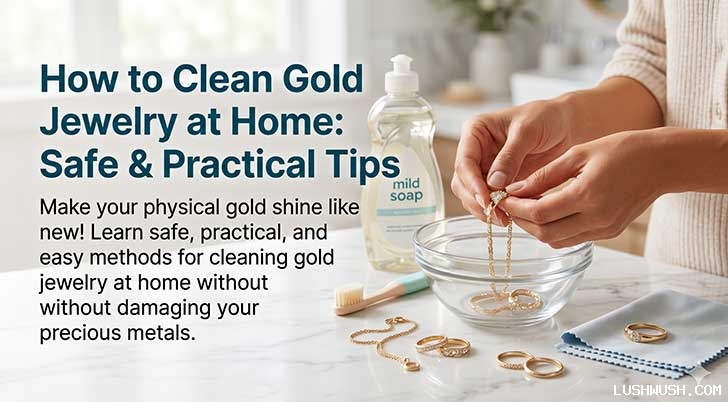
How to Clean Gold Jewelry at Home: Simple Methods That Actually Work
You pick up your favorite gold chain the one you wear almost every day hold it up to the light, and it just looks... flat. Dull. Nothing like the piece that caught your eye in the first place.
It hasn't changed. The gold is still there. What's happened is that months of sweat, body oils, perfume, lotion, and everyday dust have quietly built up on the surface, creating a film that blocks the natural shine underneath.
The good news is you don't need to take it to a jeweler. You probably have everything you need to fix this sitting in your kitchen right now.
Here's how to safely clean your gold jewelry at home and a few things you absolutely should not do.
The Method Most Jewelers Actually Recommend
For most gold jewelry chains, rings, plain bracelets this is the approach professionals suggest first. It's gentle, it works on 18K and 22K gold alike, and it won't damage the metal.
What you'll need:
- A few drops of mild liquid dish soap
- Warm water (not hot, not boiling just warm)
- A soft-bristled toothbrush (a baby toothbrush is honestly perfect for this)
- A soft, lint-free cloth
The process:
Fill a small bowl with warm water and add a few drops of dish soap. Drop your jewelry in and just let it sit for 15 to 20 minutes. This is the step most people skip because it feels like nothing is happening but it's doing the actual work. That soak is loosening the oils, lotions, and buildup that have bonded to the surface.
After the soak, take the jewelry out and gently scrub it with the toothbrush. Don't rush this part. The areas where dirt really hides are the small crevices, the back of settings, and anywhere the chain links meet. A gentle back-and-forth motion with the soft bristles is all you need.
Rinse it thoroughly under warm running water and before you do, plug the sink drain. Seriously. A ring or small earring going down the drain is a heartbreaking mistake that's entirely avoidable.
Pat the jewelry dry with a soft cloth and let it finish air drying completely before putting it on or storing it. Wearing it slightly damp can attract more dust.
When the Gentle Method Isn't Enough
If your jewelry hasn't been cleaned in a long time and the dish soap soak isn't cutting through the grime, baking soda is your next step.
Mix three parts baking soda with one part water until you get a thick paste. Apply it to the jewelry and gently rub with a soft cloth or toothbrush. Baking soda has just enough mild abrasiveness to lift heavy buildup without scratching the metal. Rinse thoroughly with warm water and dry right away don't leave the paste sitting on the gold longer than necessary.
Use this method occasionally, not as a regular routine. The dish soap method is better for monthly maintenance.
The Mistakes That Can Actually Damage Your Gold
Knowing what not to do is just as important here.
Never use bleach or anything containing chlorine. This is the big one. Chlorine doesn't just tarnish gold it can permanently weaken the alloys mixed into the gold, making the piece brittle and prone to breaking. If you swim regularly, make it a habit to take your gold jewelry off before getting in the pool. Every single time.
Stay away from harsh household chemicals. Ammonia, acetone, and heavy-duty cleaners are too aggressive for gold jewelry. They can cause discoloration and damage that isn't reversible.
Be extra careful if your jewelry has gemstones. This is where people often make mistakes. Soft or porous stones like pearls, opals, and emeralds should never be soaked in water. The soap and water that's perfectly safe for the gold can permanently damage or discolor these stones. If your piece has gemstones like these, skip the soak entirely. Instead, wipe the gold parts carefully with a slightly damp cloth and dry immediately.
Hard gemstones like diamonds, rubies, and sapphires can generally handle the soap-and-water method, but when in doubt, be cautious.
How Often Should You Actually Clean It?
For jewelry you wear regularly, once a month is a good rhythm. It takes less than 30 minutes and keeps the buildup from ever getting bad enough that you need anything stronger than dish soap.
For pieces you wear occasionally, clean them before storing after each use, and again before wearing. This keeps them looking their best without any extra effort.
Storing jewelry properly matters too. Keep individual pieces in soft pouches or separated compartments so they don't scratch each other. Gold is a relatively soft metal, and regular contact with other pieces causes tiny scratches over time that dull the surface.
Your Gold Is Worth More Than You Think
Beyond the sentimental value, the gold in your jewelry has real monetary value that changes with the market every day. A piece that feels like a family heirloom is also, in financial terms, an asset sitting on your shelf.
Whether you're holding 24K, 22K, or 18K gold, it's worth knowing exactly what it's worth at current live market rates. Our free calculator gives you an instant valuation based on today's gold prices:
Check Your Gold's Current Value with the Smart Gold Calculator
The Short Version: Warm water, a drop of dish soap, a soft toothbrush, and 20 minutes is all it takes to bring your gold jewelry back to life. Do it once a month, keep it away from chlorine, and your pieces will look just as good in 20 years as they do today.






















All comments, feedback, information or materials except email addresses submitted to Lush Wush shall be considered non-confidential and its property. By submitting such comments, feedback, information or materials to us, you agree to a no-charge assignment of all worldwide rights. For the best interest of the community, please refrain from posting vulgar comments, profanity, or personal attacks. Comments submitted may automatically be flagged for review by our moderation team before appearing on the website.