
Gold Investment For Beginners: Best Time To Buy & Sell
 88
88  1
1  13
13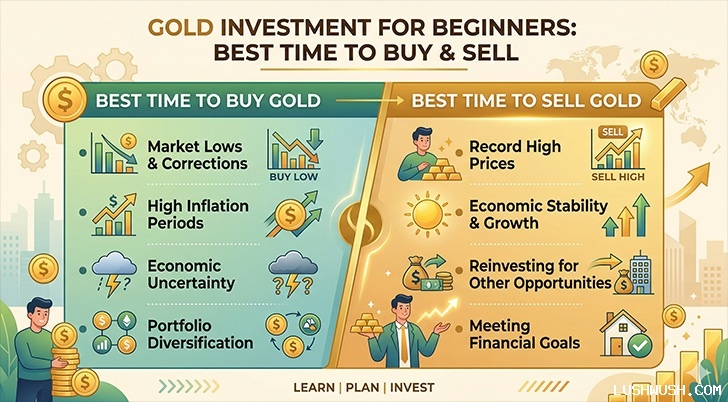
Gold Investment for Beginners: When to Buy, When to Sell, and How to Start Small
When I first thought seriously about investing in gold, my mental image was embarrassingly cinematic massive gold bars stacked in a bank vault, accessible only to the ultra-wealthy. It felt like a world I had no business entering.
Then I made my first purchase: 8 milligrams of pure 24-carat gold.
That tiny amount worth just a few dollars at the time changed something in the way I thought about investing. It wasn't the size of the investment that mattered. It was the act of starting, understanding what I was buying, and building the habit of thinking about my money differently.
If you're standing at the beginning of this journey feeling overwhelmed, this guide is for you. No jargon, no fluff. Just a practical, honest breakdown of gold investment for beginners.
Why Gold? What Makes It Different From Other Investments?
Before we talk about timing and strategy, it's worth understanding why gold has been a trusted store of value for literally thousands of years and why it still belongs in a modern investment conversation.
Gold Holds Its Value When Other Things Don't
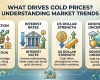
Currencies fluctuate. Stock markets crash. Real estate goes through cycles. Gold, historically, behaves differently from all of these. When inflation rises and the purchasing power of paper money falls, gold prices typically rise to compensate.
Think about it this way: in 2000, one ounce of gold was worth around $270. By 2024, that same ounce was worth over $2,000. The gold didn't change but the purchasing power of the dollar did, and gold's price reflected that shift.
This is why financial experts often call gold a hedge against inflation it's a way of protecting your wealth from quietly being eroded over time.
Gold Is Liquid
Unlike property, which can take months to sell, or fixed deposits that lock your money away, physical gold can be converted to cash relatively quickly. Most jewelers, banks, and gold dealers will buy it from you. This liquidity makes gold a practical part of an emergency financial cushion.
It Reduces Portfolio Risk
If you already invest in stocks or mutual funds, adding gold to your portfolio can actually reduce your overall risk. Gold and equity markets often move in opposite directions when stock markets fall sharply, investors tend to move money into gold, which drives the price up. This inverse relationship makes gold a valuable balancing asset.
Understanding What You're Actually Buying: 24K vs 22K Gold
One of the most common points of confusion for beginners is gold purity. You'll see numbers like 24K, 22K, and 18K used constantly. Here's what they actually mean.
24-Carat Gold (24K)
This is pure gold 99.9% gold content, with virtually no other metals mixed in. It has that deep, rich yellow color you associate with pure gold. Because it's so soft (pure gold bends easily), 24K gold isn't ideal for jewelry you plan to wear daily, but it's the best choice for investment purposes.
Gold coins, small bars, and digital gold products are typically 24K. When you buy 24K, you're getting the maximum gold content for every dollar you spend. There are no "making charges" or design markups you're paying for gold and only gold.
22-Carat Gold (22K)
22K gold is 91.6% pure gold, with the remaining 8.4% made up of other metals like copper, silver, or zinc. These added metals make the gold harder and more durable which is why most gold jewelry is made in 22K rather than 24K.
If you're buying gold primarily to wear as jewelry and secondarily as an investment, 22K is the practical choice. But if your main goal is growing and protecting wealth, the slight impurity and often higher making charges make 22K less efficient as a pure investment vehicle.
A Practical Decision Framework
- Primary goal: Investment and wealth preservation Buy 24K (coins, bars, or digital gold)
- Primary goal: Wearable jewelry with investment value Buy 22K
- Primary goal: Everyday fashion jewelry Gold purity matters less; focus on craftsmanship
When Is the Right Time to Buy Gold?
This is the question every new investor asks and the honest answer is more nuanced than most people expect.
The Myth of "Perfect Timing"
Nobody consistently buys at the absolute bottom and sells at the absolute top. Not professional traders, not hedge funds, not anyone. Trying to time the market perfectly is a losing strategy.
What you can do is understand the conditions that tend to make gold more or less attractive as a purchase.
Buy When Economic Uncertainty Is Rising
Gold prices typically rise during:
- Geopolitical tensions (wars, international conflicts, political instability)
- High or rising inflation (when your currency is losing purchasing power)
- Stock market downturns (when investors pull money out of equities)
- Currency weakness (when the dollar or your local currency is depreciating)
These aren't signals to panic. They're signals that the conditions which make gold valuable are present.
Buy During Price Dips Not Price Surges
When gold is all over the news and everyone is talking about record prices, that is usually not the best time to buy. You're buying at the peak of public attention, which often means the price has already surged.
Counterintuitively, the best times to accumulate gold are often when it's quietly going through a correction when prices dip because the stock market is doing well and investors have moved money into equities temporarily.
Use SIP-Style Buying: Small, Regular Purchases
The smartest strategy for most beginners isn't to wait for the "perfect" moment and make one big purchase. It's to buy small, consistent amounts over time a strategy called Dollar Cost Averaging (DCA).
Here's how it works in practice:
- Month 1: Gold is $62/gram you buy 1 gram
- Month 2: Gold is $58/gram you buy 1 gram (slightly cheaper)
- Month 3: Gold is $65/gram you buy 1 gram (slightly more expensive)
- Average cost across 3 months: $61.67/gram lower than two out of three months
By spreading your purchases, you avoid the risk of buying everything at a peak. Over a long period, this strategy consistently produces better average prices than trying to time a single perfect entry point.
When Is the Right Time to Sell Gold?
Knowing when to sell is just as important as knowing when to buy and it's where many investors make costly emotional mistakes.
Sell When Prices Surge During Crises
Gold prices tend to spike sharply during economic crises, recessions, and high-inflation periods. These spikes can be significant gold gained over 25% in value during the 2008 financial crisis and again during the COVID-19 economic disruption in 2020.
If you've held gold patiently for several years and a major economic event causes a sharp price surge, that's a legitimate window to sell some or all of your position and lock in profits.
Sell When You Have a Specific Financial Goal
Gold is not a savings account. It's an asset. The right time to sell is when you actually need the money for a planned, meaningful purpose a down payment on a house, funding your child's education, starting a business, or handling a significant planned expense.
Selling gold for a specific, pre-planned reason is smart financial management. You accumulated the asset for a purpose; this is that purpose.
What Not to Do: Panic Selling
This is the most common and most expensive mistake new investors make. Gold prices fluctuate. A drop of 5-10% in a month is completely normal and doesn't signal permanent loss.
Panic-selling when prices drop a little means you lock in a loss and miss out on the recovery. Historically, gold has always recovered from short-term dips over a long enough timeframe. If your investment horizon is 5-10 years, short-term volatility should not trigger a sell decision.
A simple rule: don't make permanent decisions based on temporary price movements.
Practical Ways to Start Investing in Gold Today
You don't need to walk into a jewelry store and spend a large sum to start building a gold position. Here are your main options as a beginner:
Physical Gold (Coins and Small Bars)
The most traditional approach. You own something real and tangible. Start as small as 1 gram. Buy from reputable dealers, banks, or certified jewelers. Store it securely either in a home safe or a bank locker.
Digital Gold
Several fintech platforms now let you buy gold digitally, starting from amounts as small as $1. You don't physically hold it the platform stores it in a secured vault on your behalf. This is a great entry point for absolute beginners who want to start immediately with a small amount.
Gold ETFs (Exchange Traded Funds)
Gold ETFs are traded on the stock exchange and track the price of physical gold. One unit typically represents 1 gram of gold. You buy and sell them like stocks through a brokerage account. There's no storage concern, the pricing is transparent, and it's highly liquid.
Gold Mutual Funds
Gold mutual funds invest in gold mining companies or gold ETFs, giving you indirect exposure to gold prices without needing to store anything physically. They're managed by professionals, easy to buy through any brokerage, and let you start with as little as $10-$50 depending on the platform. A popular example is the SPDR Gold Shares ETF (GLD), one of the largest and most liquid gold funds in the world.
How Much of Your Portfolio Should Be in Gold?
Most financial advisors recommend keeping 5% to 15% of your total investment portfolio in gold. This range is enough to provide meaningful protection and portfolio balance without over-concentrating in a single asset class.
If you're just starting out and don't have a large portfolio yet, don't worry about percentages. Focus on building the habit first even a small, regular gold purchase creates discipline and builds your position over time.
Know What Your Gold Is Actually Worth
Whether you're buying, selling, or just tracking your investment, knowing the current market value of what you hold is essential. Gold prices change daily based on global markets, and the value of your holding in 22K or 24K gold is different depending on today's rate.
Our free gold calculator gives you an instant, live-rate valuation based on the weight and purity of your gold:
Calculate Your Gold's Current Market Value with the Smart Gold Calculator
Final Thoughts: The Mindset That Makes Gold Work
Gold investment rewards patience above everything else. It rewards people who start early, buy consistently, don't panic during dips, and sell with purpose rather than emotion.
You don't need to be wealthy to start. You don't need to understand every detail of global economics. You need three things: a basic understanding of what you're buying, a consistent habit of adding to your position, and the patience to let time do the work.
Start where you are. Start with what you have. Even 1 gram at a time.
Have you already invested in gold, or is this something you're considering for the first time? The comments are open share where you are in the journey.


















All comments, feedback, information or materials except email addresses submitted to Lush Wush shall be considered non-confidential and its property. By submitting such comments, feedback, information or materials to us, you agree to a no-charge assignment of all worldwide rights. For the best interest of the community, please refrain from posting vulgar comments, profanity, or personal attacks. Comments submitted may automatically be flagged for review by our moderation team before appearing on the website.