
How To Clean Gold Jewelry At Home: Simple Methods That Actually Work
 229
229  0
0  25
25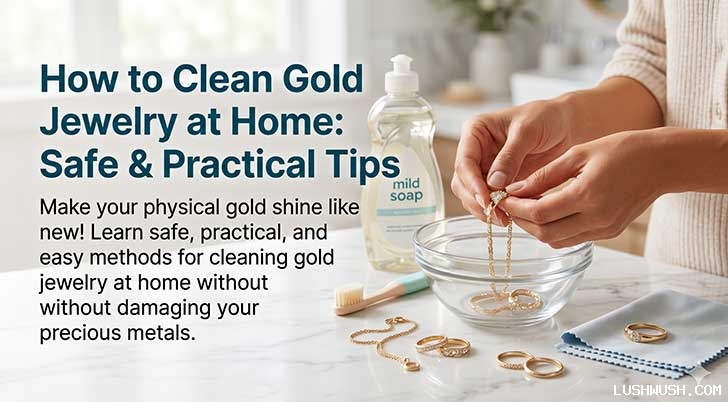

How to Clean Gold Jewelry at Home: Simple Methods That Actually Work
The $1,200 Bracelet That Went in the Pool
Layla wore her 10-gram, 22-karat gold bracelet almost every day worth roughly $1,200 at current gold prices, a gift she genuinely loved. One summer, she never took it off before jumping in the pool. Not once. Not even for the deep end.
By the end of the season, the bracelet had gone slightly brittle at one of the links. She didn't think much of it until the day it simply snapped on her wrist, mid-conversation, over nothing more dramatic than reaching for her coffee. The jeweler she brought it to explained what had happened in about ten seconds: chlorine exposure, repeated over months, had quietly weakened the alloy mixed into the gold. The repair resizing the damaged link and reinforcing the clasp ran her $85. She was lucky; a full break in a more structural section of a piece can sometimes mean a total loss if the design can't be repaired at all.
Nothing about that bracelet's gold content had changed. The metal itself was exactly as valuable as the day she bought it. What changed was the alloy holding it together, and that damage was entirely preventable with one five-second habit: taking it off before getting in the water.
Why Gold Jewelry Loses Its Shine (Even Though the Gold Never Changes)
Pick up a gold chain you wear constantly and hold it to the light if it looks flat and dull instead of catching that warm shine it had on day one, the gold hasn't changed at all. What's happened is that months of sweat, body oils, lotion, perfume, and everyday dust have quietly built up on the surface, forming a thin film that blocks the shine underneath. It's cosmetic, not structural, and it's almost always fixable at home in under 30 minutes with ingredients already in your kitchen no trip to a jeweler required.
The Method Most Jewelers Actually Recommend
For most gold jewelry chains, rings, plain bracelets this is the approach professionals suggest first. It's gentle, it works equally well on 18K and 22K gold, and done correctly, it won't damage the metal.
What You'll Need (And What It Actually Costs)
- A few drops of mild liquid dish soap a single bottle (roughly $3-4) lasts through dozens of cleanings
- Warm water not hot, not boiling, just warm
- A soft-bristled toothbrush a baby toothbrush works perfectly, and costs $1-2
- A soft, lint-free cloth around $5, reusable indefinitely
All in, a full at-home cleaning kit costs under $10 total, one time, and covers years of monthly cleanings. Compare that to a single professional ultrasonic cleaning at a jeweler, which typically runs $20-40 per visit the DIY kit pays for itself after the very first use.
The Step-by-Step Soak-and-Scrub Process
- Fill a small bowl with warm water and add a few drops of dish soap. Drop the jewelry in and let it sit for 15 to 20 minutes. This is the step most people rush or skip entirely, but it's doing the actual work loosening the oils and buildup that have bonded to the surface
- After the soak, gently scrub with the toothbrush, paying extra attention to small crevices, the backs of settings, and anywhere chain links meet. A gentle back-and-forth motion with soft bristles is all that's needed
- Rinse thoroughly under warm running water and plug the sink drain first. A ring or small earring disappearing down a drain is a completely avoidable, genuinely heartbreaking mistake, and it happens more often than people expect
- Pat the jewelry dry with the soft cloth and let it fully air dry before wearing or storing it. Putting away slightly damp jewelry tends to attract dust faster
When the Gentle Method Isn't Enough: The Baking Soda Method
If a piece hasn't been cleaned in a long time and the dish soap soak isn't cutting through the buildup, baking soda is the next step up. Mix three parts baking soda with one part water into a thick paste, apply it to the jewelry, and gently rub with a soft cloth or toothbrush. Baking soda has just enough mild abrasiveness to lift heavier grime without scratching the metal underneath. Rinse thoroughly with warm water and dry immediately don't let the paste sit on the gold longer than necessary.
This method costs essentially nothing, since baking soda is already a kitchen staple most households have on hand. Use it occasionally for deeper cleans, not as your regular monthly routine the dish soap method is gentler and better suited for maintenance.
The Mistakes That Can Actually Damage Your Gold (What NOT to Do)
Chemicals to Never Use
- Bleach or anything containing chlorine. This is the big one, and it's exactly what happened to Layla's bracelet. Chlorine doesn't just dull gold it can permanently weaken the alloys mixed into it, making the piece brittle and prone to snapping. If you swim regularly, make removing gold jewelry before getting in the pool a non-negotiable habit, every single time
- Ammonia, acetone, and heavy-duty household cleaners. These are too aggressive for gold jewelry and can cause discoloration or damage that isn't reversible, unlike the surface dulling that dish soap easily fixes
Gemstone-Specific Care
This is where well-meaning cleaning attempts most often go wrong. Soft or porous stones pearls, opals, emeralds should never be soaked in water. The exact same soap-and-water combination that's perfectly safe for gold can permanently damage or discolor these stones. If a piece has gemstones like these, skip the soak entirely: wipe only the gold portions with a slightly damp cloth and dry immediately.
Hard gemstones diamonds, rubies, sapphires can generally handle the standard soap-and-water method without issue, but when you're unsure what a stone actually is, caution costs nothing and a damaged stone can cost $30-80 or more to have professionally reset or replaced.
How Often Should You Actually Clean It? (Building a Maintenance Routine)
For jewelry worn regularly, once a month is the right rhythm it takes under 30 minutes and prevents buildup from ever reaching the point where you'd need anything stronger than dish soap. For pieces worn only occasionally, clean before storing after each use, and again before the next time you wear it.
Storage matters just as much as cleaning frequency. Keep individual pieces in soft pouches or separated compartments rather than tossed together in one drawer gold is a relatively soft metal, and regular contact between pieces causes tiny scratches over time that dull the surface faster than normal wear ever would.
DIY Cleaning vs. Professional Cleaning: Real Cost Comparison
It helps to see the actual numbers side by side before deciding how often to outsource this:
- At-home dish soap method: under $10 total kit cost, reusable for years effectively free per cleaning after the first purchase
- At-home baking soda method: a few cents' worth of a pantry staple per use
- Professional ultrasonic cleaning at a jeweler: typically $20-40 per visit
- Professional steam cleaning and polish: typically $40-75 per visit
- Chlorine-damage repair (like Layla's snapped link): commonly $50-150, depending on the extent of the damage
- Replating a damaged gold-plated piece: typically $50-150, since plating (unlike solid gold) can wear through entirely with heavy damage
Cleaning monthly at home costs close to nothing over a full year. Relying on professional cleaning for that same routine 12 visits at roughly $30 average would run around $360 a year, for a task that dish soap and a toothbrush handle just as effectively for solid gold pieces without gemstone concerns.
Your Gold Is Worth More Than You Think
Beyond the sentimental value, the gold in your jewelry has real, fluctuating monetary worth. A 10-gram 22-karat piece like Layla's bracelet is worth roughly $1,200 today based on current market rates but that number moves daily with the international gold price, so "roughly" is doing real work in that sentence.
Here's the detail most people miss: proper care doesn't just keep jewelry looking nice, it protects how that piece gets valued if you ever sell it. A well-maintained piece can often be valued and sold as finished jewelry, factoring in craftsmanship on top of raw metal weight. A heavily tarnished, scratched, or structurally damaged piece is frequently only offered scrap or melt value by a buyer the raw gold price for its weight and purity, with none of the workmanship value included. In other words, neglect doesn't just cost you the piece's appearance; it can genuinely cost you money the day you decide to sell.
Your Practical At-Home Cleaning Action Plan
- Set a recurring monthly reminder for a 20-minute dish soap soak on your regularly worn pieces
- Assemble a simple DIY kit once dish soap, a soft toothbrush, a lint-free cloth for well under $10 total
- Make removing gold jewelry before swimming or heavy cleaning a fixed habit, not an occasional afterthought
- Check for gemstones before you soak anything. Soft stones like pearls and opals get wiped, not submerged
- Store pieces separately in soft pouches or compartments to prevent scratching between items
- Reach for baking soda only occasionally, for deeper cleans, not as your default monthly method
- Check your gold's current value with a quick calculation before selling, insuring, or simply out of curiosity condition and purity both factor into what a piece is actually worth today
Beginner FAQ: Cleaning and Caring for Gold Jewelry
Is it safe to clean gold-plated jewelry the same way as solid gold? Not quite as freely. Solid gold can handle the dish soap soak repeatedly with no issue, but gold-plated pieces have only a thin layer of gold over a base metal, and heavy scrubbing or frequent soaking can gradually wear that plating thin. A gentler wipe-down, rather than a full soak, is the safer routine for plated jewelry.
Can I use toothpaste to clean gold jewelry? This is a common myth worth retiring. Most toothpaste contains mild abrasives designed for tooth enamel, which is far harder than gold over repeated use, toothpaste can create fine scratches on gold's relatively soft surface. Dish soap and a soft toothbrush do the job without that risk.
How do I know if my jewelry is real solid gold before cleaning it? Look for a hallmark stamp numbers like 916 (22K), 750 (18K), or 999 (24K) usually stamped somewhere inconspicuous on the piece. If there's no stamp and you're unsure, treat it cautiously with a gentle wipe rather than a full soak until you can confirm, since gold-plated and gold-filled pieces need different care than solid gold.
Does cleaning my gold jewelry actually increase its resale value? Cleaning alone won't change the raw gold content, which is priced by weight and purity regardless of shine. What it protects is the jewelry value on top of that a well-maintained piece is more likely to be assessed and priced as intact jewelry, while a damaged or heavily tarnished one often gets valued down to scrap price, which can mean losing the workmanship value entirely.
Can I use vinegar to clean gold jewelry? It's another common internet suggestion worth being cautious about. Vinegar is mildly acidic, and while pure high-karat gold itself resists most acids reasonably well, the other metals mixed into lower-karat gold (like 18K) can react to prolonged acid exposure, and any gemstones present are even more vulnerable. The dish soap method achieves the same result with none of that risk, so there's little reason to reach for vinegar in the first place.
Layla's bracelet didn't lose its worth because of a design flaw or bad luck. It lost a link and briefly, its wearability because of one small habit that never got formed. The good news is that the fix, in both directions, is almost absurdly simple: 20 minutes with dish soap once a month to keep it looking its best, and five seconds to take it off before the pool to keep it structurally sound. Both habits cost nothing and protect a piece that's genuinely worth protecting.
Curious what your own gold jewelry is actually worth at today's rates? Check its real value in seconds with our free Smart Gold Calculator enter the weight and purity, and see exactly what it's worth before you clean it, insure it, or sell it.






















All comments, feedback, information or materials except email addresses submitted to Lush Wush shall be considered non-confidential and its property. By submitting such comments, feedback, information or materials to us, you agree to a no-charge assignment of all worldwide rights. For the best interest of the community, please refrain from posting vulgar comments, profanity, or personal attacks. Comments submitted may automatically be flagged for review by our moderation team before appearing on the website.